Gotrade News – Indonesia faces fresh global index removals as FTSE Russell and MSCI cut multiple Jakarta-listed names. Foreign investors pulled a net Rp 1.07 trillion, about USD 60 million, in a single session.
The exits compound a year-to-date foreign outflow of Rp 51.42 trillion, or roughly USD 2.9 billion. Emerging-market investors holding Indonesia proxies face direct passive-flow pressure and benchmark tracking risk.
Key Takeaways
- FTSE Russell removes four Indonesian stocks effective June 22, 2026, following MSCI cuts effective May 29.
- Foreign capital outflow reaches Rp 51.42 trillion year to date as the IHSG slides 28.74 percent.
- Indonesia regulators call the selloff a normal correction, citing oversold technical conditions for large caps.
Index Removals Reshape Passive Flows
According to MetroTV, MSCI announced on May 13 the removal of five Indonesian stocks from its Global Standard index. The same review cut thirteen names from the MSCI Small Cap index, effective May 29, 2026.
FTSE Russell followed on May 23 with four removals from its FTSE Global Equity Index Series. The exclusions take effect June 22, forcing passive funds tracking these benchmarks to rebalance Indonesian exposure.
The four FTSE removals include DSSA, flagged for large-cap shareholding concentration issues. DAAZ, HILL, and MLIA were cut for free float and trading quality failures, per Liputan6.
Funds tracking emerging-market benchmarks such as the Vanguard FTSE Emerging Markets ETF (VWO) must mirror these adjustments. Index provider MSCI Inc. (MSCI) reviews flow directly into ETF holdings worldwide.
Foreign Outflows Pressure The Rupiah
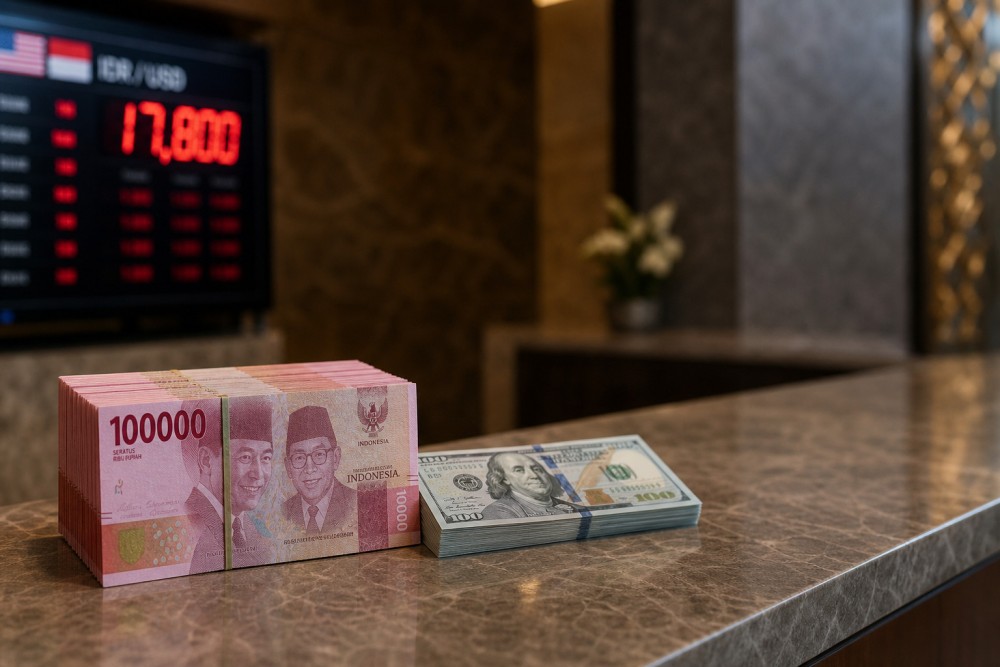
As reported by Liputan6, the rupiah weakened to Rp 17,717 per US dollar amid sustained outflows. Bank Indonesia raised its benchmark interest rate by 50 basis points to defend the currency.
The Jakarta Composite Index, known as IHSG, has shed 28.74 percent year to date. The iShares MSCI Indonesia ETF (EIDO) offers the most direct US-listed proxy for this benchmark performance.
Nafan Aji Gusta, Senior Market Analyst at Mirae Asset Sekuritas Indonesia, said the IHSG is technically stretched. Per Liputan6, Gusta noted the IHSG is “extremely oversold based on the RSI indicator.”
Large-cap Indonesian names may stage a technical rebound from current oversold levels. However, structural index removal flows continue to weigh on broader market sentiment through June.
Indonesian authorities are pushing back on panic narratives around the selloff. According to Liputan6, regulators frame the moves as standard corrective behavior.
Hasan Fawzi, Head of Capital Market Supervision at financial regulator OJK, called the weakness a “normal correction, not panic.” OJK Chair Friderica Widyasari Dewi reiterated that Indonesia capital markets remain a long-term investment proposition.
Jeffrey Hendrik, Acting President Director of the Indonesia Stock Exchange (IDX), outlined a plan to restore global index eligibility. Per MetroTV, the exchange targets improved market cap and liquidity standards.
Hendrik said the IDX will hold discussions to increase the count of Indonesian companies meeting global index criteria. Market cap thresholds and trading liquidity remain the binding constraints for re-inclusion.
For international investors, the index churn highlights single-country emerging-market risk concentrations. Diversified vehicles dilute Indonesia-specific exposure while retaining broad EM tilt for portfolio construction.