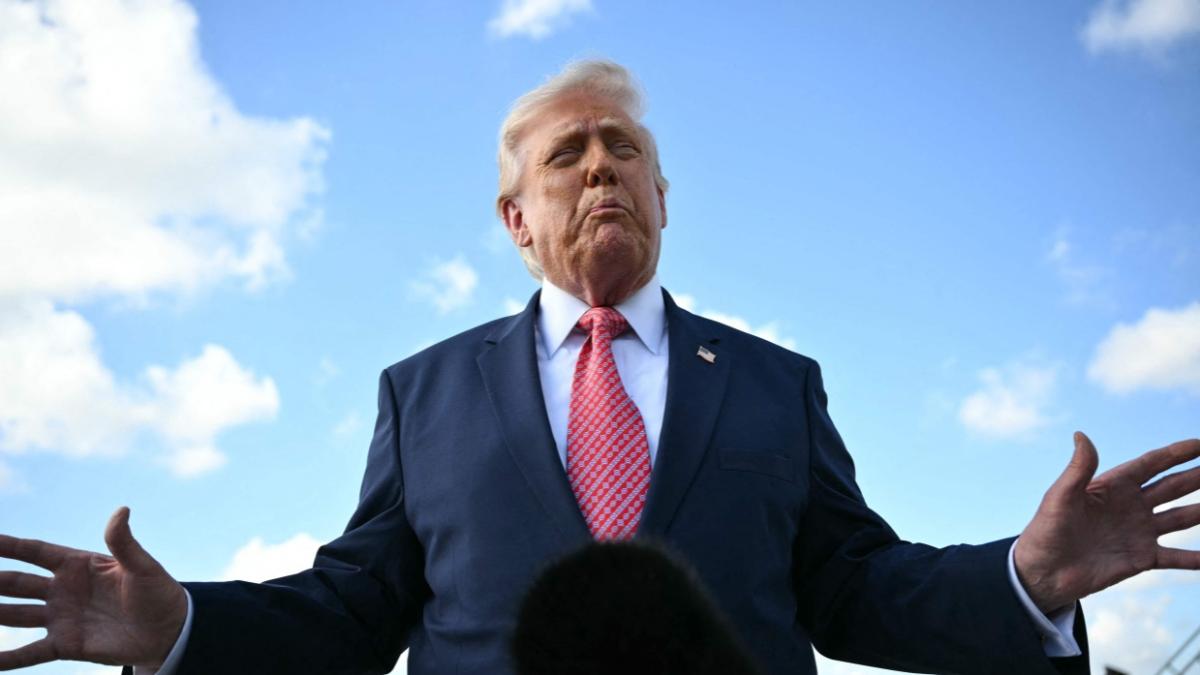
Brent crude falls as ‘absence of clear path forward keeps markets volatile’
Brent crude has now fallen 1.8% to $107.86 a barrel.
“For now, the absence of a clear path forward is keeping markets volatile and indecisive,†said Daniela Hathorrn, senior market analyst at Capital.com.
double quotation mark Markets are once again on edge as the US–Iran conflict enters a critical phase, with investors effectively trading against another countdown clock set by the Trump administration. The situation has evolved into a near-term binary outcome: either escalation through direct strikes on Iranian infrastructure, or a last-minute de-escalation that could trigger a sharp reversal in risk assets.Recent developments suggest that tensions remain high. Despite intermittent headlines hinting at negotiations or potential off-ramps, rhetoric from Washington has remained aggressive, while Iran continues to hold firm on its position, particularly around control of the strait of Hormuz. That chokepoint remains the central issue in the conflict, and neither side appears willing to concede easily. While escalation would be damaging for both, the strategic incentives are misaligned: the US is trying to restore stability and energy flows, while Iran is leveraging disruption as a deterrent. That dynamic keeps the risk of further escalation elevated.
Market behaviour reflects this uncertainty. Oil prices remain elevated, embedding a persistent geopolitical risk premium tied to potential supply disruption. The US dollar and yields have also been supported, reflecting tighter financial conditions and inflation concerns. Meanwhile, equities have shown resilience, but that appears more driven by positioning and technical factors, including thin liquidity conditions around the Easter period, than by genuine optimism about the outlook. The stability in stocks may mask a degree of complacency, especially given the magnitude of the risks.
Meanwhile, incoming economic data is starting to reflect the strain. The latest ISM services print [out yesterday] showed weaker-than-expected activity alongside rising price pressures, reinforcing concerns about a stagflationary dynamic: slower growth combined with higher inflation. With CPI data due in the coming days expected to show a pickup in headline inflation, markets are also reassessing the Federal Reserve's ability to ease policy in the near term. In essence, markets are stuck between two narratives: hope for de-escalation and fear of a more disruptive phase of the conflict. Until there is greater clarity volatility is likely to remain elevated, with asset prices continuing to react sharply to each new headline.
Key events
Please turn on JavaScript to use this feature
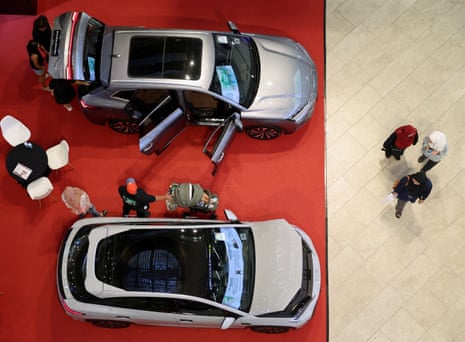
UK new car sales jump in March driven by electric vehicles
New car sales in the UK rose by 6.6% year on year in March, as electric vehicles had their best month ever from orders placed before the Iran war.
However, EV sales will fall far short of the government-mandated target for 2026, industry warned, calling for a review of the government's energy transition strategy.
Some 380,627 new vehicles were registered in March, which is typically the busiest month of the year because of the number plate change, according to the latest figures from the Society of Motor Manufacturers and Traders (SMMT). It was the best month overall since 2019.
Growth was driven primarily by private buyers, whose registrations rose 10.1% to 162,470 units. Fleet registrations increased 3.5% to 208,853 units, while the smaller business sector grew 18.8% to 9,304 units.
Electric vehicles accounted for 196,059 registrations. Plug-in hybrid sales rose 46.9% to take a 13% market share, while hybrid electric vehicles increased 7.3% to take 15.8% of the market.
Battery electric vehicles reached a new record, up 24.2% to 86,120 sales. However, with a market share of only 22.6% for the month, and 22.4% year to date, uptake is now even further adrift of the government's zero emission vehicle (ZEV) mandate target of 33% for 2026.
Tesla's sales in the UK rose 20% to 8,599 units, trailing behind Chinese rival BYD, whose sales jumped 133% to 15,162 vehicles.
Mike Hawes, the SMMT chief executive, said:
double quotation mark The strongest new car market since 2019, with the highest ever volume of EV registrations, is a boost to the industry and the economy. However, the headlines belie the costs incurred and the challenges involved. Much of March's performance will be from orders placed before the start of the Iran conflict, which threatens to raise the cost of living, undermining consumer confidence.Against this backdrop, and with the EV market falling further away from mandated levels despite record levels of incentives, an urgent review of the transition is required to secure a sustainable market, economic growth and the UK's net zero ambitions.
Despite rising EV volumes, conditions have diverged sharply from those assumed when the mandate was set. At the start of 2026, battery costs were more than 30% higher than expected and industrial energy prices around 80% above 2021 levels, while public charging can cost over 140% more than five years ago.
Future costs and demand are even more uncertain given the Iran crisis, which may spark interest in EVs but risks pushing up energy and supply chain costs, undermining consumer confidence.
While government has sought to support the market, through the introduction of the electric car grant, manufacturers are still forced to shoulder “unsustainable costs to comply with the regulation when natural demand lags ambition,†the SMMT said.
Having invested billions in the technology and products to deliver a choice of more than 160 EV models, manufacturers are relying heavily on discounting to stimulate demand.
UK prices at the pump rise over Easter weekend
Prices at the pump rose further over the Easter weekend, on the back of a surge in oil prices since the start of the Iran war on 28 February.
RAC head of policy Simon Williams said:
double quotation mark While the four-day Easter weekend will have been a good break for many, it's proved bad for fuel prices with both petrol and diesel going up significantly yet again.
Over the course of the bank holiday weekend, petrol went up 2.6p a litre to 157.02p and diesel by 4.2p to 189.42p. Diesel looks set to go through the 190p-a-litre mark on Wednesday which would then mean it's only 9p away from the record high set on 25 June 2022 (199.09p), he said.
double quotation mark Drivers – particularly those who rely on diesel which is up by a third since the start of the conflict – are facing a torrid time, even with the current 5p-a-litre duty discount in place. Many will no doubt be looking to the government to go further to ease the pain they're experiencing at the pumps.
UK highstreets busy over Easter weekend despite storm Dave
Easter delivered a welcome boost for UK retailers, as warmer weather and local events pulled people into towns and cities, especially on Easter Monday.
Despite storm Dave, which brought strong winds, rain and some snow to parts of the UK, visitor numbers rose by 3.4% over the Easter weekend compared with this time last year, according to a report from the real estate software firm mri. The run-up to Easter had been more subdued.
People flocked to high streets where visits jumped 21.1% on Easter Monday alone, and were up 4.1% over the weekend. Retail parks and shopping centres also saw a lift, with visits up by 5.2% and 9% respectively on Easter Monday.
Coastal and historic towns were especially busy, while central London and regional cities also saw solid growth.
However, Clive Black, head of consumer research at Shore Capital, was cautious about the outlook, given the escalating Iran war and surge in energy prices and other costs.
double quotation mark What a difference a year makes, eh? Easter 2025 was wall-to-wall sunshine and so sold-out garden centre bays, full price spring-summer clothes sales whilst the BBQ was well on the go. Spring 2026? Storm Dave in northern Britain blowing the heads off tulips , Glasgow Celtic playing Livingston in snow, whilst BBQs were for only the hardiest.More to the point, war in Iran, diesel at nearly 200p a litre, the prospect of rising inflation, and a pause in any UK base rate cuts. Tough comparatives and easing discretionary spending capabilities will condition many near-term trading statements, most clearly Tesco with its 16 April preliminary results albeit M&S too in the absence of disruption.
Brent crude falls as ‘absence of clear path forward keeps markets volatile’
Brent crude has now fallen 1.8% to $107.86 a barrel.
“For now, the absence of a clear path forward is keeping markets volatile and indecisive,†said Daniela Hathorrn, senior market analyst at Capital.com.
double quotation mark Markets are once again on edge as the US–Iran conflict enters a critical phase, with investors effectively trading against another countdown clock set by the Trump administration. The situation has evolved into a near-term binary outcome: either escalation through direct strikes on Iranian infrastructure, or a last-minute de-escalation that could trigger a sharp reversal in risk assets.Recent developments suggest that tensions remain high. Despite intermittent headlines hinting at negotiations or potential off-ramps, rhetoric from Washington has remained aggressive, while Iran continues to hold firm on its position, particularly around control of the strait of Hormuz. That chokepoint remains the central issue in the conflict, and neither side appears willing to concede easily. While escalation would be damaging for both, the strategic incentives are misaligned: the US is trying to restore stability and energy flows, while Iran is leveraging disruption as a deterrent. That dynamic keeps the risk of further escalation elevated.
Market behaviour reflects this uncertainty. Oil prices remain elevated, embedding a persistent geopolitical risk premium tied to potential supply disruption. The US dollar and yields have also been supported, reflecting tighter financial conditions and inflation concerns. Meanwhile, equities have shown resilience, but that appears more driven by positioning and technical factors, including thin liquidity conditions around the Easter period, than by genuine optimism about the outlook. The stability in stocks may mask a degree of complacency, especially given the magnitude of the risks.
Meanwhile, incoming economic data is starting to reflect the strain. The latest ISM services print [out yesterday] showed weaker-than-expected activity alongside rising price pressures, reinforcing concerns about a stagflationary dynamic: slower growth combined with higher inflation. With CPI data due in the coming days expected to show a pickup in headline inflation, markets are also reassessing the Federal Reserve's ability to ease policy in the near term. In essence, markets are stuck between two narratives: hope for de-escalation and fear of a more disruptive phase of the conflict. Until there is greater clarity volatility is likely to remain elevated, with asset prices continuing to react sharply to each new headline.
Sentix investor morale tumbles as they realise ‘recession is once again on the table’
Confidence among investors in the eurozone has fallen sharply, driven by worries over the surge in energy prices and supply chain disruptions arising from the US-Israeli war on Iran.
The Sentix index measuring investor morale in the eurozone fell to -19.2 points from -3.1 the month before, the monthly survey showed, worse than than the forecast of -9 from analysts polled by Reuters.
The Sentix global investor survey, which was started by the German behavioural finance expert Manfred Hübner in 2001, questioned more than 1,000 investors between 2 and 4 April.
Comparing the decline to that of this time last year, when Donald Trump began to hike trade tariffs, Frankfurt-based Sentix said:
double quotation mark Investors realise that recession is once again on the table.The attacks on energy infrastructure and disruptions to shipping in the Persian Gulf are weighing even more heavily on people's minds than they did four weeks ago.
The expectations index fell to -15.5 points from 3.5 the previous month, while the index measuring the current situation plunged to -22.8 from -9.5 in March. The index for the German economy, Europe's largest, fell to -27.7 from -12.1 in March. All four readings were the lowest since last April.
European stocks turn positive; Brent dips below $110
European stock markets have all turned positive, as investors took Donald Trump's deadline for Iran to reopen the strait of Hormuz in their stride.
In London, BP and Shell pushed higher as oil prices rose above the $110 per barrel mark. Crude has just retreated, though, with Brent trading 0.3% lower at $109.39 a barrel in volatile markets.
The FTSE 100 index is up 26 pints, or 0.25%, at 10,463. The Dax in Frankfurt climbed 0.7%, the CAC in Paris gained 1.2%, and the FTSE MiB in Milan and the Ibex in Madrid both climbed more than 1%.
“While stocks tell their own story, it is striking how far energy markets are from pricing in a dampening down in Middle East tensions,†said Dan Coatsworth, head of markets at the stockbroker AJ Bell.
double quotation mark President Trump's threats of widespread strikes on Iran if the Strait of Hormuz is not reopened by the early hours of tomorrow morning UK time, if taken at face value, create the conditions for a binary set of outcomes.Either there is a climbdown on the part of Washington or Tehran, which could prompt a major rally in equities and easing of energy prices, or a major escalation with all the implications that might have for financial markets.
An alternative scenario is that the deadline is extended, and the markets face another uneasy period of trying to gauge the latest mood music in the US and Iran.
The FTSE 100's precious metals mining contingent was on the back foot as gold retreated on continued strength in the dollar and the potential for interest rate hikes, factors which have outweighed any safe-haven attractions during the current crisis.
UK business activity hit by Iran war; weakest rise in service sector output for 11 months
The Iran war has also hit business activity in the UK, where stagflation risks have also increased.
The headline seasonally adjusted PMI business activity index from S&P Global posted 50.5 in March, down from 53.9 in February and the lowest since April 2025. This final reading was below the earlier ‘flash' estimate of 51.2 in March. Any reading above 50.0 indicates an overall expansion of business activity.
The monthly survey highlighted a considerable slowdown in business activity growth across the service economy. mostly linked to falling business and consumer spending due to concerns about the impact of the war in the Middle East.
Profit margins were under pressure as input cost inflation hit the highest level in 11 months, driven by higher prices paid for fuel, transportation and raw materials.
Higher output levels have been recorded in each of the past 11 months, but the latest expansion was only marginal and the weakest seen over this period.
Many companies said the escalating conflict in the Middle East affected client confidence and investment decisions in March. There was a renewed decline in total new work received by UK service sector companies, the first downturn in order books since November while the pace of contraction was the sharpest for eight months.
Export sales have taken a hit, with new business from abroad falling at the fastest rate since last April. Backlogs of work remained broadly unchanged, despite reports of international shipping delays and worsening supply chain performance.
Tim Moore, economics director at S&P Global Market Intelligence, said:
double quotation mark UK service providers experienced a marked slowdown in output growth in March as the war in the Middle East encouraged greater risk aversion among clients and postponed investment decisions. Cutbacks to business and consumer spending meant that the rate of business activity expansion was the weakest seen since April 2025.Stagflation risks appear to have increased, with the final Services PMI data signalling slower growth and higher cost pressures than the earlier ‘flash' estimates based on data compiled up to 20th March. Overall input cost inflation has accelerated sharply since February and was the strongest for 11 months, which was overwhelmingly linked to rising fuel and transportation bills. Many firms also noted that suppliers had sought to pass on higher prices paid for energy, raw materials and shipping.
Rising global economic uncertainty due to the war in the Middle East contributed to a further decline in business optimism across the UK service economy. Confidence levels have fallen sharply after hitting a 15-month high in January. Service providers widely commented on fragile domestic economic conditions and concerns about the impact of rising inflation and higher borrowing costs on client demand over the year ahead.
Eurozone posts slowest growth in business activity in 9 months, raising ‘spectre of stagflation’
The eurozone economy recorded the slowest growth in business activity in nine months in March, as new orders fell across the service sector and cost pressures jumped.
This raises the “unwelcome spectre of stagflation,†according a closely-watched monthly survey from S&P Global.
It showed that demand worsened in the eurozone for the first time since July. Its eurozone composite PMI output index, which covers manufacturing and services, fell to 50.7 in March from 51.9 in February, pointing to weakening of economic growth.
The headline measure was well below its historical average of 52.4. This was because of the dominant service sector, where activity levels barely rose, while manufacturing output growth remained solid.
At the national level, economic activity trends were mixed. Spain was the fastest-growing country in March, registering an accelerated upturn. Ireland followed closely behind, although the rate of expansion eased to a six-month low.
The eurozone's largest economy – Germany – recorded the weakest growth so far this year, while France and Italy – the No 2 and No 3 economies – suffered contractions in business activity.
Chris Williamson, chief business economist at S&P Global Market Intelligence:
double quotation mark March's PMI indicates that the eurozone economy has already been hit hard by the war in the Middle East. The encouraging signs of growth seen earlier in the year have been eradicated thanks to surging energy prices, choked supply chains, financial market volatility and a renewed downturn in demand. The accompanying surge in prices raises the unwelcome spectre of stagflation, or worse, in the near-term.The near-stalling of growth in March drags the PMI's signal for first quarter GDP growth down to 0.2%. More worrying is that there are clear risks of the economy contracting in the second quarter unless there is a swift resolution to the conflict, and even then we will likely see damaging energy market repercussions extending into the coming months.
JPMorgan gets go-ahead for new Canary Wharf tower
JPMorgan Chase has won approval to build a new tower in Canary Wharf, which will be one of the tallest in Europe.
The Wall Street bank had been in talks with officials from nearby City airport over potential height restrictions, but the two sides reached an agreement in February for the tower to rise to 265 metres, the Financial Times reported.
This means JPMorgan's new UK headquarters will overtake One Canada Square as Canary Wharf's tallest building, which at 235m has held that title for more than three decades.

When JPMorgan announced plans in November to build a multi-billion-pound tower on its Riverside South site, it did not provide details about its height because its final design plans were held back by the potential constraints.
The Docklands financial district is about three miles west of London City Airport and lies within its “safeguarding zoneâ€, meaning the airport must be consulted on new developments.
The US bank revealed its plans to build a 3m sq ft tower in Canary Wharf last November, just hours after banks were spared tax hikes in Rachel Reeves' autumn budget. It will house more than half of its 23,000 UK staff and is expected to cost £3bn.
Universal Music receives takeover offer from Bill Ackman's Pershing Square
In other news, the American billionaire Bill Ackman's hedge fund has offered to buy Universal Music Group (UMG) in a deal that values the world's biggest music company at more than €50bn (£44bn).
Pershing Square, the New-York based hedge fund, has offered to buy the business, which is home to artists including Taylor Swift and Elton John, in a cash and stock deal.
Ackman said in a statement that while the company, which is led by the British-born Sir Lucian Grainge, had done “an excellent job nurturing and continuing to build a world-class artist roster and generating strong business performanceâ€, its share price had lagged owing to issues “unrelated to the performance of its music businessâ€.
Shares in UMG, which have been listed in Amsterdam since 2021, have lost more than a quarter of their value in the past year alone.
The company is one of the “big three†record labels, alongside Sony Music Entertainment and Warner Music Group. Its roster ranges from classical music to stars such as Adele, Drake and Ariana Grande.
European stocks mixed
On the stock markets, the FTSE 100 index in London rose by 70 points in early trading, but is now down nearly 22 points, or 0.2%, at 10,414.
Germany's Dax slipped 0.2% while France's CAC rose 0.45%, and Italy's FTSE MiB and Spain's Ibex edged 0.1% and 0.2% higher respectively.
Spot gold has dipped 0.07% to $4,644 an ounce.
Richard Hunter, head of markets at interactive investor, said:
double quotation mark US markets finished on a cautiously positive note after the long weekend, but in the immediate term investors are facing a binary event – ceasefire or further escalation of the conflict.As such, guidance continues in the form of often unconfirmed third party reports detailing progress (or the lack of it) in negotiations. Of little doubt is that the US president's latest deadline to Iran expires this evening where, in the absence of any agreement from his foes, he has threatened to destroy Iran's power plants and bridges, causing irreversible damage to the country's energy infrastructure.
The latest reports perhaps suggest a less sinister outcome, with claims that mediators are discussing a 45-day ceasefire, which could conceivably mark an end to the war. Separately it is claimed that such an agreement would be accompanied by an immediate reopening of the Strait of Hormuz. In any event, time is quickly running out as the deadline approaches which in turn will keep investor sentiment brittle and on high alert.
UK construction activity tumbles
Construction activity in the UK has tumbled as the industry struggles to cushion the blows from the war in the Middle East and a persistently weak economy, according to a survey.
Work starting on site declined by 17% in the three months to March compared with the fourth quarter of last year, and was 18% below 2025 levels, according to Glenigan's latest construction index.
The US-Israel war on Iran started at the end of February and shows no sign of coming to an end any time soon, resulting in considerable uncertainty for the construction sector.
Residential construction dropped by 13% quarter on quarter, and was down 30% year on year, also hit by confusion around planning policy and a weak economy.
Non-residential project starts fell by 15% on the quarter, and by 5% on the year. Offices bucked the trend, with increases in new projects starting on site.
The index covers all underlying projects with a value of £100m or less. It highlights the serious challenges facing the UK construction sector, a “severely disrupted supply chain and unprecedented market volatilityâ€.
Glenigan's Allan Wilen said:
double quotation mark All three main verticals: housing, non-residential buildings and civil engineering are considerably lower than a year ago and on the previous quarter on a seasonally adjusted basis.The sector is fighting on all fronts, home and abroad. Particularly, the Iran war will depress activity further near-term as private developers and house purchasers delay investment decisions due to fears of higher than anticipated interest rates, rising material costs, spiralling energy costs and stalled economic growth. It will have a knock-on effect on the non-residential verticals which, although many have ring-fenced funding, will no doubt be putting activity on hold to ensure they don't waste budgets whilst rates spike.
Introduction: Oil rises above $110 as Trump deadline looms for Iran to reopen strait
Good morning, and welcome to our rolling coverage of business, the financial markets and the world economy.
Oil prices continued to climb on Tuesday above $110 a barrel amid a deadline imposed by Donald Trump for Iran to open the strait of Hormuz or be “taken out,†with the US president threatening to order attacks on Iranian power plants and bridges.
He threatened to rain “hell†on Tehran if it does not meet his deadline of Tuesday 8pm ET (1am BST Wednesday) to reopen the strait, a key shipping route. In response to a US proposal through mediator Pakistan, Tehran rejected a ceasefire and insisted on a permanent end to the war.
Brent crude rose 1.1% to $111.01 a barrel, while New York light crude hit $115.3 a barrrel, up 2.6%.
Asian stock markets were mostly higher, with Japan's Nikkei rising 0.19% and South Korea's Kospi up 1.2%, while Hong Kong's Hang Seng fell by 0.7%.
The war in the Middle East will lead to higher inflation and slower global ​growth, the head of the International Monetary Fund warned, ahead of the lender's latest forecast next week.
The war has triggered the worst-ever disruption in global energy supply, with millions of barrels of oil production shuttered due to Iran's effective blockage of the strait of Hormuz, through which a fifth of the world's oil and gas pass in normal times. Even if the conflict is swiftly resolved, the IMF is set to reduce its forecast for economic growth and lift its outlook for inflation, Kristalina Georgieva, managing director of the IMF, told Reuters.
Kyle Rodda, senior financial market analyst at the trading platform Capital.com, said:
double quotation mark The markets are back on a Trump-imposed countdown clock. To use a sporting analogy, it's red time, and the result could go either way. Like a fortnight ago when the first threats from the Trump administration to attack Iranian power plants and other infrastructure were made, the markets are plonked at a crossroad, facing a binary outcome, at least in the short term.Either the attacks happen, marking a possibly catastrophic escalation where regional energy assets and civilian infrastructure across the Gulf is considered fair game. In such an instance, the energy complex jumps, pushing the US Dollar and global yields higher, and equities and non-yielders like gold lower. Or there's a backdown, even better, a ceasefire, and the markets stage an epic relief rally, where a plunge in oil takes yields and the US Dollar with it, and equities and gold rip.
Despite some hopeful headlines yesterday, most of the news paints a grim picture of how things are unfolding roughly 27 hours after Trump's deadline. President Trump's rhetoric is hawkish and increasingly unhinged and the Iranians remain obstinate, with reports suggesting both sides remain worlds apart on the terms of a ceasefire, especially as it pertains to the Strait of Hormuz. Neither would benefit from an escalation.
New car sales in the UK climbed by around 6% in March – usually the biggest month for vehicle registrations, according to preliminary industry data.
Sales of battery electric vehicles reached a record high, the Society of Motor Manufacturers and Traders said. However, their market share of 23% is still below the government-mandated target of 33% for this year.
The industry has called for an urgent review of the UK's electric vehicle transition, as surging gas prices driven by war in the Middle East have lifted electricity rates.
The Agenda
-
8.45am-9am BST: Italy, France, Germany, eurozone S&P Global PMIs (final) for March
-
9am BST: UK new car sales for March
-
9.30am BST: UK S&P Global PMI for March
-
1.30pm BST: US durable goods for February