The World Health Organization has issued a dire warning regarding the eastern Democratic Republic of the Congo, declaring a catastrophic collision as a rapidly spreading Ebola outbreak intersects with armed conflict and severe acute hunger.
WHO Director-General Tedros Adhanom Ghebreyesus cautioned that relentless rebel attacks and displaced populations have rendered conventional containment strategies nearly impossible in Ituri province. The overlapping crises present a multifaceted humanitarian disaster that threatens to completely destabilize the broader Great Lakes region, severely straining global intervention resources and placing neighboring nations on high operational alert.
A Catastrophic Intersection Of Crises
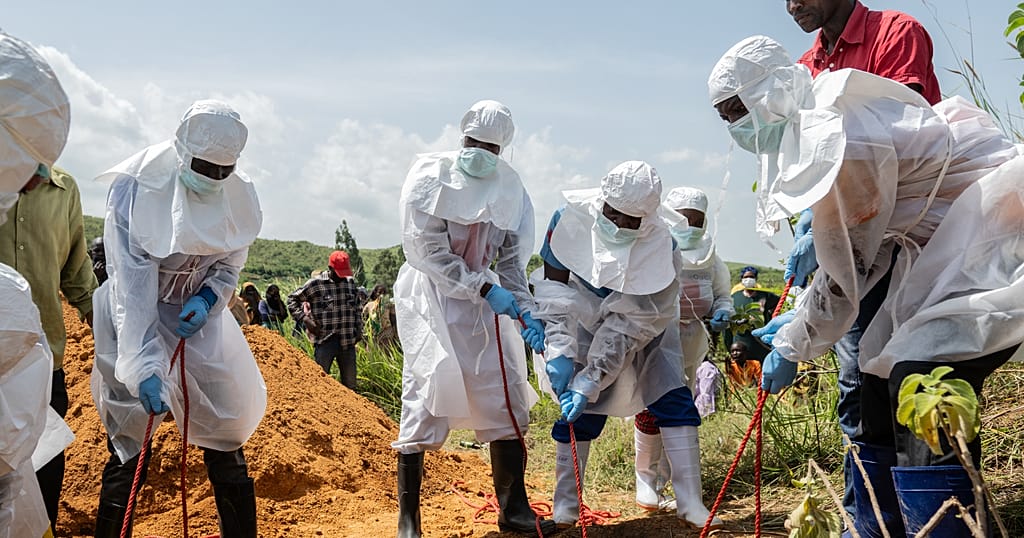
The emergence of the Bundibugyo ebolavirus strain in a highly volatile combat zone has created an epidemiological nightmare for international medical teams. In Ituri province, the basic prerequisites for disease control—community trust, secure isolation facilities, and stable contact tracing—have been entirely obliterated by continuous mortar fire and marauding militia factions.
Frontline healthcare workers find themselves navigating a deadly paradox. They are tasked with administering critical care and establishing strict quarantine protocols while simultaneously dodging insurgent ambushes. The tragic reality, as articulated by the WHO leadership, is that it is fundamentally impossible to isolate the sick and build essential community rapport while artillery shells are leveling the very clinics meant to provide salvation.
The situation is further compounded by a devastating hunger crisis triggered by the systemic destruction of agricultural infrastructure. Malnourished populations, weakened by months of acute caloric deficit, possess severely compromised immune systems, making them highly susceptible to the hemorrhagic fever. The convergence of starvation and viral proliferation creates a fatal feedback loop of unprecedented proportions.
The Staggering Human Toll
The raw data emerging from the conflict zones paints a horrific picture of a completely overwhelmed public health infrastructure. Medical intelligence units are struggling to maintain accurate ledgers amidst the chaos, but the preliminary figures represent a dire humanitarian emergency.
- Approximately 1,000 suspected cases of the Bundibugyo Ebola strain have been reported across the battered eastern provinces.
- At least 220 suspected fatalities have occurred, though the total collapse of regional testing laboratories means only one death has been formally lab-confirmed.
- Seven confirmed cross-border infections have already been recorded by health authorities in neighboring Uganda.
- Tragically, the infection vector has successfully penetrated the medical establishment, with two frontline healthcare professionals contracting the virus while on duty.
Operational Paralysis Amidst Conflict
The Bundibugyo strain of the virus, originally identified in Uganda in 2007, currently possesses no internationally approved vaccine or targeted therapeutic treatment. This pharmacological vacuum means survival depends entirely on early detection, aggressive intravenous rehydration, and meticulous supportive care—luxuries that simply do not exist in a region fractured by perpetual warfare.
The mass displacement of civilian populations further accelerates the geographic spread of the pathogen. As terrified families flee militia massacres, they unwittingly carry the virus along chaotic refugee corridors, seeding new outbreaks in previously uncontaminated displacement camps. The sheer volume of human movement renders traditional epidemiological containment perimeters completely obsolete.
Armed factions have also demonstrated a chilling willingness to target medical personnel and infrastructure. Ambulances have been hijacked, isolation wards looted for supplies, and contact tracing teams violently expelled from rural villages fueled by paranoid misinformation. The weaponization of the public health crisis by local warlords effectively sentences thousands of innocent civilians to agonizing deaths.
The Geopolitical And Economic Fallout
The economic implications of an uncontrolled Ebola outbreak in the heart of Africa are staggering. The Democratic Republic of the Congo is a vital node in the global supply chain for critical minerals, including cobalt and coltan. A total collapse of regional stability threatens to disrupt mining operations, sending shockwaves through the international technology and electric vehicle manufacturing sectors.
For the government in Kinshasa, the outbreak represents an existential threat to its already fragile authority over the eastern provinces. The inability of the central state to provide basic biological security or physical protection severely erodes public confidence, potentially driving desperate communities directly into the arms of anti-government insurgent groups promising localized protection.
The crisis also forces international donors to make agonizing financial calculations. Billions of dollars in humanitarian aid must be urgently mobilized to establish heavily fortified, militarized treatment centers. However, the high probability of those investments being destroyed by rebel artillery makes institutional donors highly hesitant to commit the necessary capital, resulting in a lethal funding bottleneck.
A Looming Threat To East Africa
The threat to the East African Community is immediate and severe. Nairobi, serving as the primary aviation and logistical hub for the region, remains highly vulnerable to imported infections. Kenyan public health officials have already initiated elevated thermal screening protocols at Jomo Kenyatta International Airport and major overland border crossings in anticipation of an epidemiological breach.
The regional integration project, heavily reliant on the seamless movement of goods and labor, faces potential paralysis. If the outbreak breaches the borders of Rwanda or South Sudan, the resulting panic will trigger immediate, unilateral border closures, instantly suffocating billions of shillings in cross-border trade and sparking hyperinflation in landlocked markets.
Ultimately, the situation in the Democratic Republic of the Congo cannot be viewed as an isolated tragedy; it is a ticking biological time bomb with global ramifications. The international community must realize that fighting the virus requires first neutralizing the armed conflict that allows it to thrive—a monumental geopolitical challenge that demands immediate, unified military and medical intervention.
As the death toll mounts in the shadows of the Ituri forests, the world is forced to confront a terrifying reality: the most dangerous weapon in this brutal conflict is no longer the bullet, but the microscopic virus spreading unchecked in its wake.